
MA-ID: 729102090
Klantbeoordeling Numex OÜ

Nice coin, well packaged and promptly shipped. This is why I am a repeat cu...
As always, everything is perfectly fine.
Historisch sehr interessante Münze, Transaktion TOP!
Fast shipping and reliable seller.
1039 - 1056 Speyer. Denar 1039-1056 Henry III F

Numex OÜ 
10
Verkoper op MA-Shops sinds 10 jaar
1290 Beoordelingen,
99,8 % Positief (Laatste 24 maanden)
Verzending wereldwijd
70,00 EUR
Het artikel is uitverkocht.
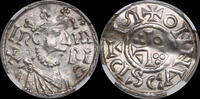
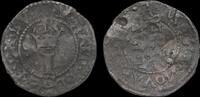
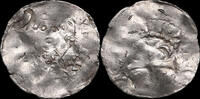
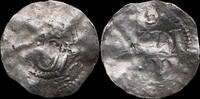
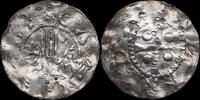
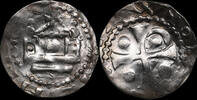
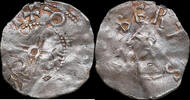
Speyer, City. Denar, 1039–1056, Henry III (Heinrich III). 0.68 g. F. Silver. Catalog: Dannenberg 829. Kluge 143 var.
Numismatic Insight: The Dual-Ruler Speyer Denar of Conrad II and Henry III (Dannenberg 829 / Kluge 143)
Overview: A silver denar of Speyer attributed to the reign of Henry III (1039–1056), catalogued as Dannenberg 829 and Kluge 143 (variant). Grade F (Fine), weight 0.68 g — a light, thin flan with the wavy surface typical of Salian Rhineland pennies. The type is historically outstanding: it is the only known Ottonian–Salian German coin that shows two rulers together — father and son, Conrad II and Henry III.
Design: Obverse — two crowned facing busts flanking a cross-tipped sceptre (crozier), with legend of the type +CHONRADI P HEINRICI (“Conrad [and] Henry”). Reverse — facing half-length figure of the Virgin Mary with the Christ Child, legend +SCA MARIA (“Saint Mary”). On this Fine specimen legends are largely worn; the dual busts with central cross and the Marian reverse remain readable in outline. Catalog “var.” marks a die or legend variant of the standard Dannenberg 829 / Kluge 143 type.
Historical context — co-rule and Salian Speyer: Conrad II (king 1024, emperor 1027–1039) carefully prepared the succession of his son Henry, who was crowned co-king in 1026/28 and succeeded as sole ruler in 1039. Numismatists still debate whether this Speyer type belongs to the co-reign (c. 1028–1039) or to Henry III’s sole reign after 1039; the seller and many catalogues place it under Henry III, 1039–1056. Either way the message is clear: dynastic continuity of the new Salian house, proclaimed in silver at Speyer — the city Conrad chose as Salian burial place and where Henry III completed the great cathedral dedicated to the Virgin Mary. The Marian reverse echoes Henry’s well-attested devotion to Mary (Speyer cathedral, the Marienstift at Aachen, and the dedication imagery of the Codex Aureus of Echternach given for Speyer c. 1045/46).
Why the type matters: Across Ottonian and Salian coinage, imperial portraits are almost always a single ruler. Speyer’s double portrait of Conrad and Henry is unique in that corpus — a numismatic monument to a planned succession and to Speyer’s special role in Salian sacral politics. Henry III also greatly expanded Speyer’s mint output; this type sits at the heart of that expansion.
Numismatic details: Silver denar. Weight 0.68 g (light for the type; comparable specimens often c. 0.8–1.4 g). Grade F (Fine). Catalog: Dannenberg 829. Kluge 143 var. Period attributed 1039–1056 (Henry III); design pairs Conrad II with Henry III. A historically eloquent Salian Speyer penny: dual rulership, Marian piety, and the Salian necropolis mint on one thin silver flan.







Info / FAQ
|
hier de overeenkomst herroepen Startpagina van de MA-SHOP | 0Winkelwagen | Algemene verkoopvoorwaarden | Contactgegevens | MA Algemene verkoopvoorwaarden | Privacybeleid | Garantie | MA-Shops Nieuwe artikelen Copyright ® 2001-2026, MA-SHOPS Coins All Rights Reserved. Designated trademarks and brands are the property of their respective owners. |