

Filter en sorteer
Klantbeoordeling Stankov

Bien réçu, tout Ok, Bonne opération. Merci
All perfect!
Alles bestens
Alles perfekt gelaufen. Danke.
MA-ID: 341102454
France Award Medal (July Medal) The Three Glorious Days (Revolution of 1830). XF-AU


Filip Stankov 
3
Verkoper op MA-Shops sinds 3 jaar
1404 Beoordelingen,
100 % Positief (Laatste 24 maanden)
219,00 EUR
Korting 106,00 EUR / 33%
BTW: Margeregeling
Excl. 15,00 EUR Verzending ( to Nederland )
Levertijd: 8 - 12 dagen
Excl. 15,00 EUR Verzending ( to Nederland )
| bestelhotline +31 (0)6 8317 0586 |
| Betaalmethoden |
| Overboeking |
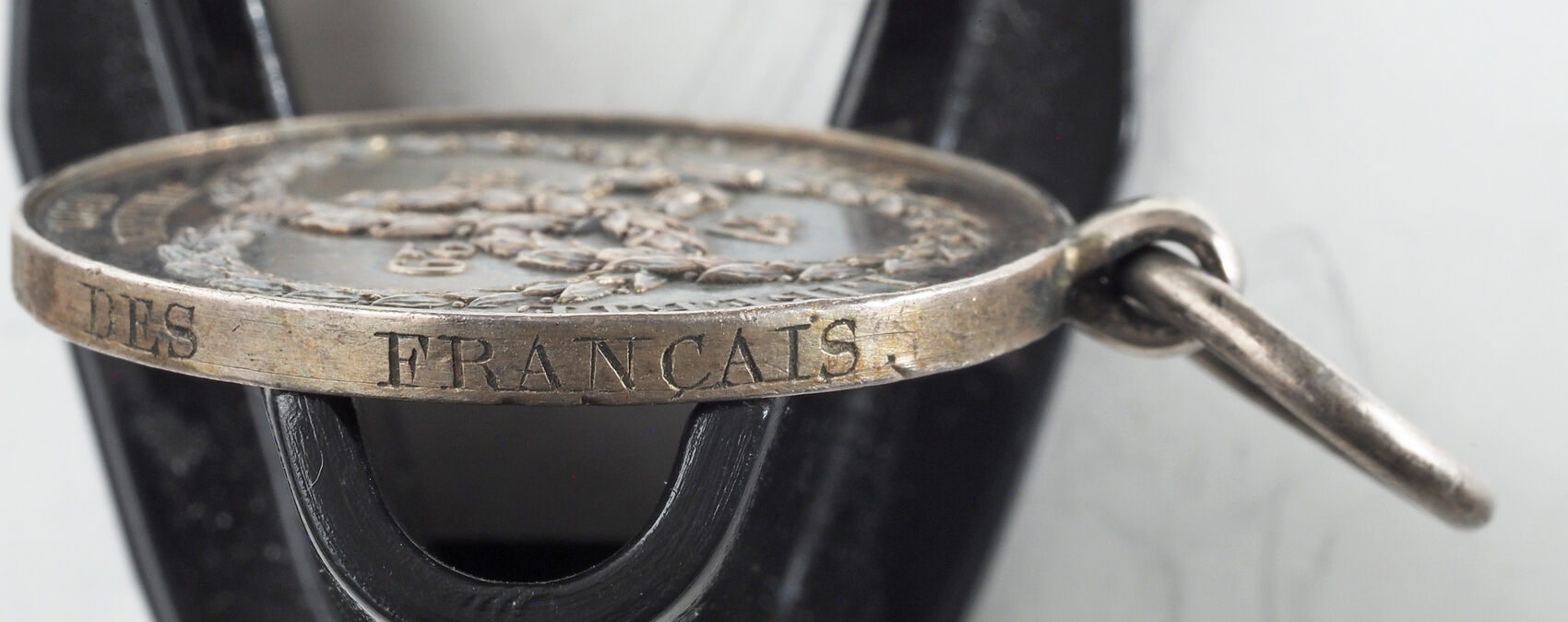
1830, France. The Three Glorious Days in July. Silver Award Medal.
Mint Year: 1830
Mintage: 3,763pcs.
Mint Place: Paris
Reference: v. Heyden 188.
Conditoin: Minor edge-hits, engraved edge, otherwise a nicely toned XF-AU!
Denomination: Award Medal - The Three Glorious Days in July (commonly known as the July Medal).
Material: Silver
Weight: 16.19gm
Diameter: 32mm
Obverse: Rooster standing left on a flag within an oak wreath.
Legend: A SES DEFENSEURS LA PATRIE RECONNAISSANTE .
Translated: "To it's defenders, a grateful nation."
Reverse: Three wreaths entwined in each other with days of the three Golory Days (27, 28 & 29) of July, 1830.
Legend: PATRIE LIBERTE JUILLET 1830.
Translated: "Homeland, Freedom, July, 1830.")
Edge Inscription: DONNE PAR LE ROI DES FRANCAIS.
Translated: "Awarded by the King of the French."
Trois Glorieuses (French for "Three Glorious Days") refers to the French Revolution of 1830, which took place over three days—July 27, 28, and 29, 1830—and led to the overthrow of King Charles X.
The July Medal was one of two French honorary decorations planned by Louis-Philippe I to honour those who had helped overthrow Charles X of France during the Trois Glorieuses (27–29 July) and establish the July Monarchy. The other was the July Cross. It was set up by an ordinance of 13 May 1831 to reward "citizens who accomplished acts of courage during these days but whose devotion to the cause of Liberty did not justify the July Cross". The medal was sent to 3,763 people.
The July Monarchy (French: Monarchie de Juillet), officially the Kingdom of France (French: Royaume de France), was a liberal constitutional monarchy in France under Louis Philippe I, starting on 9 August 1830, with the revolutionary victory in the July Revolution of 1830, and ending on 24 February 1848, with the Revolution of 1848. It marks the end of the Bourbon Restoration (1814–1830). It began with the overthrow of the conservative government of Charles X, the last king of the main line House of Bourbon.


|
hier de overeenkomst herroepen Startpagina van de MA-SHOP | 0Winkelwagen | Algemene verkoopvoorwaarden | Contactgegevens | MA Algemene verkoopvoorwaarden | Privacybeleid | Garantie | MA-Shops Nieuwe artikelen Copyright ® 2001-2026, MA-SHOPS Coins All Rights Reserved. Designated trademarks and brands are the property of their respective owners. |